Home
Blog
About Me
Connect
Services
Hypnotherapy
Offerings
Podcast & YouTube Channel for Kids

Root&Connect

Feel Grounded, Be Focused, Live Balanced
Home
Blog
About Me
Connect
Services
Hypnotherapy
Offerings
Podcast & YouTube Channel for Kids

Time Sensitive in a Big Bad World

I woke up this morning thinking about my grandfather who was born on April 21st of 1919 and died on December 14th of 2016 having lived a very full life of 97 years. He was a man of integrity and discipline with rigidity around time because he knew that time was a form of currency that you can never get back and so he spent it well.

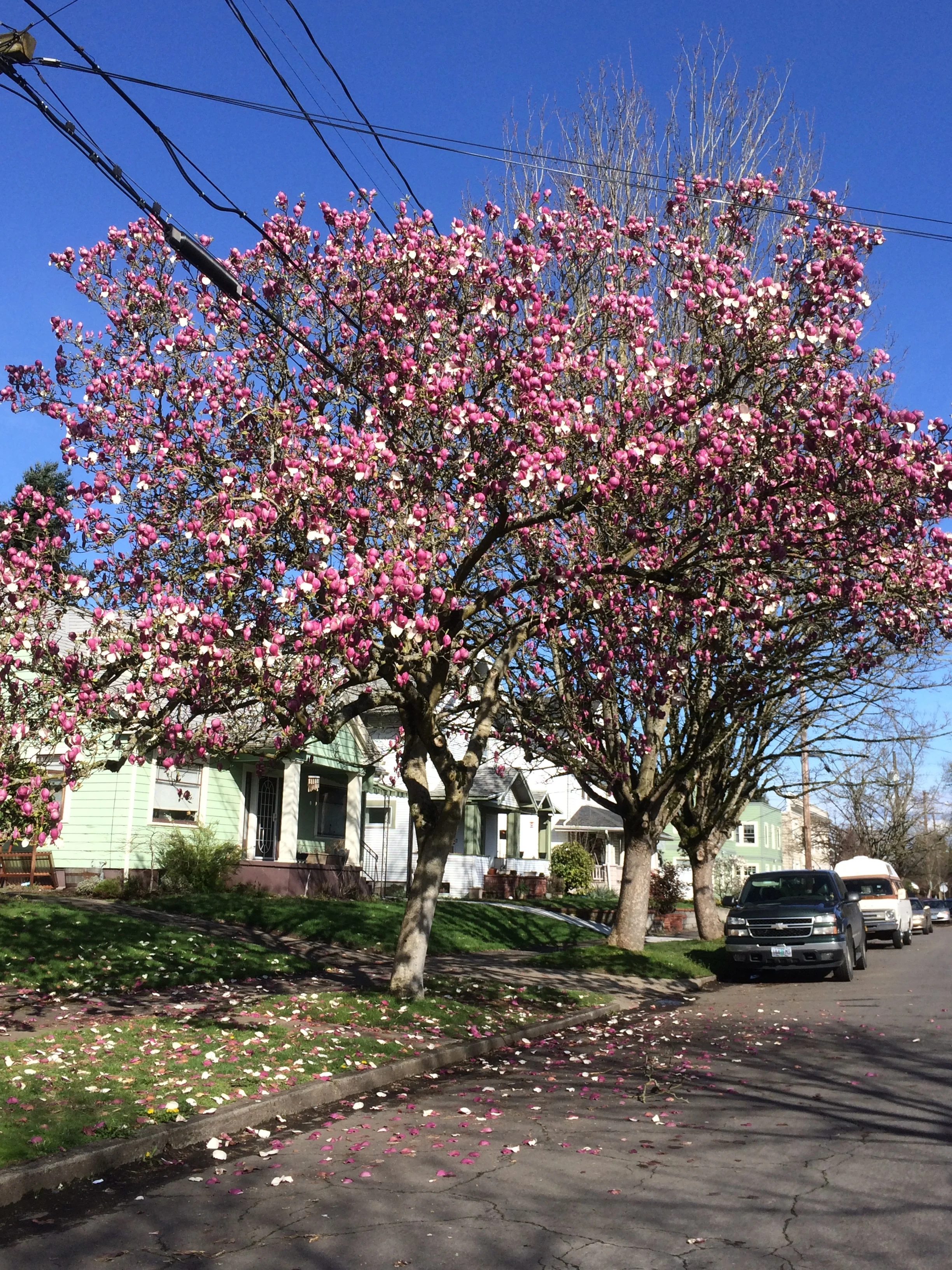
Today was the warmest day of the year in Portland thus far. I was fortunate to have the day off to spend time outside admiring all of the gorgeous spring flowers and trees illuminated by the sun. When the sun is out in this city and the temperature warms up, this place for me feels as close to paradise as when I'm swimming in the oceans of Maui.

After mindful walking in the park, I was gifted with an especially inspiring yoga class where I could feel creativity pouring out of my heart and mind as I tried to remain focused on giving time to appreciate my body and love my breath.

My yoga teacher said a few things that sparked curiosity and calmed my spirit. The first was when she said the words, 'big bad world'. I thought to myself, 'that's an interesting way to think of things', but then it dawned on me that it is today's truth in many ways.

Decisions are being made for us that make no sense, things feel extremely out of our control, and people are grappling with feeling unsafe, anxious, scared, and sad as they drown in despair from not knowing what to do or how to change external factors that influence their internal landscape.

The second thing my yoga teacher said was, 'contentment is available for us with every breath, in every moment'. My brain decided to put these two phrases together as a problem and a solution. By no means am I saying that taking time to do yoga and focus on your breath is going to actually solve the state of the world we are currently living in.

What I am saying is that finding ways to relax, ground down,  and connect with your self through body and breath can help to alleviate anxiety and depression and calm your fears. The more helpful thing we can do for one another as a society right now is to take care of our own self so that we can be of help in taking care of others.

Time is a currency that you cannot get back. The way we spend our time says so much about who we are, what we value, and how we desire to live day to day, moment to moment. I believe that one of the best ways we can help one another is to improve the collective consciousness of our planet by engaging in daily practices of self care, otherwise know as self love.

By taking the time to manage our own anxieties and fears and find ways to be aware of what remains good, we can brave these difficult and stress inducing times. We can invest time in connecting with our own self and others to remind us that this big bad world continues to hold an amazing amount of magnificent energy, beauty, and goodness.

Take time to smell and admire the flowers.

It’s not about time, it’s about choices. How are you spending your choices?

Beverly Abamo – Author


PostedApril 21, 2017
Authorangela guerrero
CommentPost a comment

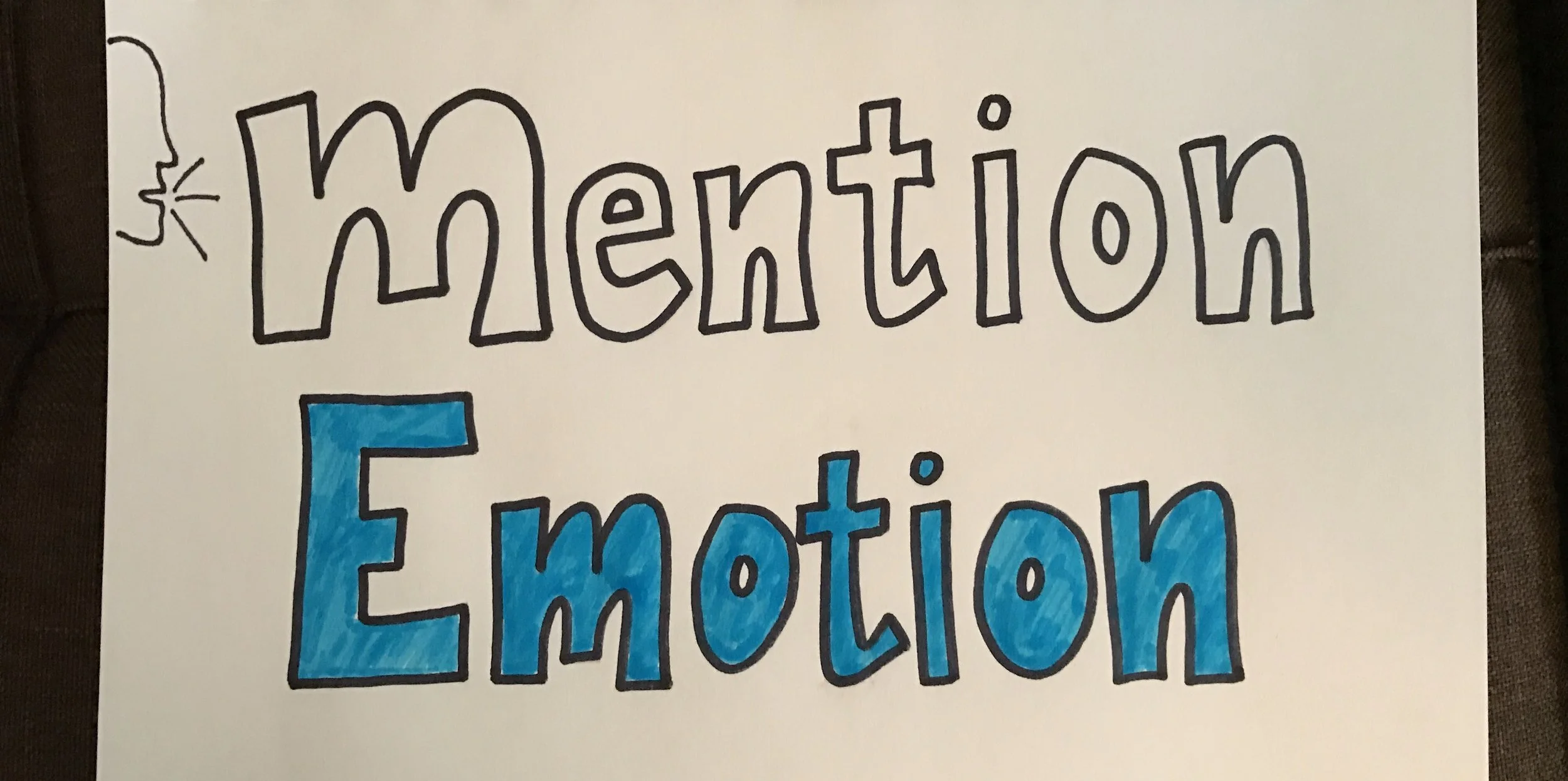
Mention Emotion

I often think of how to communicate the importance of befriending emotions and forming a new kind of relationship with all of them, not just the ones we want to feel like joy, love, peace, gratitude, and excitement.

It dawned on me not too long ago that the word mention has similar letters to the word emotion if you jumble them around.

In the last year of my being a full time therapist, I’ve come to the realization that I spend the majority of time talking with clients about two things that I believe shape so much of our lives: Relationships and Communication.

I begin each session with checking in to see if clients can identify their own emotions. “What are some feelings you've had in the last week?”, I ask. The usual responses are 'okay', 'good’, 'bad' or 'terrible', none of which are actual emotions. My next question is “what are actual feelings you've had that you can identify?” This is my way of encouraging people to name their emotions.

A common term that many in my field know and use is ‘Name to Tame’. What this means is that when we learn to name an emotion we are feeling, we can calm the emotion somewhat by giving it the attention it needs.

As soon as we are able to connect with our self enough to recognize and label a feeling, there is often an immediate physiological response where the body relaxes and an emotional response of relief from the feeling that is causing us pain. The feeling may not actually go away, but instead its power is lessened.

Recently, I learned that the actual life span of an emotion is 90 seconds so essentially when we experience a big emotion in our body such as anger or sadness or shame, the reason it lasts longer than 90 seconds is because our mind has come on board to feed the emotion with thoughts that reinforce it. At this point, the body (emotion) and mind (thoughts) are in relationship working together to make the emotion(s) feel larger than life and impossible to manage or tame.

Understanding the relationship between the body and mind is crucial for us to learn how to calm our self, particularly in moments when we are having big emotions. Managing emotions otherwise known as emotional regulation begins with forming a new kind of relationship with your emotions where you mindfully take a pause to allow yourself to breathe, feel, identify, and label the feeling before getting swallowed up by a wave of energy that feels too large to swim in.

Once you label the emotion you are feeling, the next step is to have the courage to communicate it out loud either to yourself or to another. You mention emotion in order to communicate what you are feeling because if you don't, suppression will lead to depression.

We mention emotion by using ‘I feel’ messages that communicate what we feel and why we feel it. An example would be, “I feel angry when you say you are going to do something and then you don’t because what that says to me is I can’t depend on you.”

It is important to note that ‘I feel’ messages do not involve statements such as “I feel like you don’t follow through with what you say you are going to do.” Like is not an emotion and most people will not respond well when you make statements that do not involve a feeling.

Can you see the difference between these two statements and why the first may be received with more ease and less defensiveness?

Mentioning the emotion changes the energy of what is being communicated and simultaneously allows your feelings to be respected as much as your thoughts. In this way, more of your whole self feels felt by you and more importantly, validated.

The relationship we have with our own self is essential for us to have meaningful connections with others.

Try this practice and mention emotion often to communicate from a more heart-centered place. The result may be surprising as you begin feeling more connected with self and with those around you.

Here are a few questions on Relationships and Communication you can ask yourself:

How do I communicate with myself? Lovingly or Harshly?

Can I easily identify what I am feeling?

Do I communicate my feelings with others?

What is the relationship with my emotions like?

Do I usually reject or accept my big emotions?


PostedMarch 27, 2017
Authorangela guerrero
CommentPost a comment

Make Your Breath Your Favorite Soundtrack

What is your favorite song?

Is it the lyrics or the melody that moves you?

What instruments are playing in the song?

Can you imagine what we humans would be like and feel like if we payed as much attention to our breath as we did to the music we love to listen to?

I heard these words from one of my yoga teachers a few months ago and since then, I have been trying to form a new and different kind of relationship with my breath. As I brainstorm about actions to take to transform Root&Connect into something more than just a website and a blog, I have come to this very important conclusion:

My relationship with my breath is just as important as the relationship I have with my mind, my body, my spirit, my emotions, and with others. How do I know this to be true?

As I learn more about mindfulness and how it helps us, I have greater understanding of how everything is about energy!

Our thoughts are energy, our emotions are energy, our movements are energy. And our breath is what feeds and circulates our energy. Taking more deep, mindful breaths brings new energy to our bodies that nourishes, soothes, and calms us.

Breath defined is: an inhalation or exhalation of air from the lungs and the power of breathing; life.

Breathe defined is: take air into the lungs and then expel it, especially as a regular physiological process and be or seem to be alive because of this.

If our breath is what is essential for us to exist, doesn't it make sense for us to be more mindful of it by giving energy to noticing it, engaging with it, feeling it, and best of all sitting in silence and stillness to hear it more often?

Daily practice tip: Try taking a few pauses throughout your day to connect with your breath and get curious about it.

What does it sound like?

What does it feel like as it goes in and out of your lungs?

What is the quality of your breath?

Do you like how it sounds?

What does focusing on the sound of your breath cause you to feel?

Turn your breath into one of your favorite soundtracks. Press play at any time and jam on.

PostedMarch 14, 2017
Authorangela guerrero
1 CommentPost a comment

The Power of Focus

Pause. Focus. Take a moment to think about your day to day and answer these two questions:

What do I focus on?

How do I focus?

I wrote the title to this blog entry over 3 months ago and thought about it being on my desktop waiting for me to find the time and focus to write it. Since I'm usually feeling most inspired during yoga class, it makes it difficult for me to jump on a computer and type away when my brain shifts focus from breath and body to putting thoughts into words.

This is probably one of the most important blog entries I will ever write because the subject is so huge and immensely valuable in my life these days and I can't imagine it ever shifting to be any other way.

Pause. Focus. Why is focus such an all-encompassing topic?

I'll start by saying that as a psychotherapist, I spend a substantial portion of my time helping others to think about things in a new way in hopes of shifting perspective so that they can sort through and figure out the things in their life that seem too chaotic, too overwhelming or too painful to deal with on their own. Essentially what we do is we unpack the baggage and see how we can arrange it in new ways.

When I was in graduate school, I remember one of my professors saying that people come to counseling when they are desperate and can't see any other way out on their own. Anytime I get a new client that says they have never been in therapy before, I welcome them with an even bigger smile than usual and say with compassion that I am happy they have taken the leap to get the help they need to form a new relationship with themselves which includes their mind, their body, their spirit, and their emotions.

How does this tie into focus? Well, humans operate by having thoughts and feelings, then choosing their actions and words. Most of us know that our mind is very powerful and most of the time it wants to be in charge. Many people feel that they are controlled by their mind because they are always thinking, thinking, thinking and they have no idea how to stop the endless thoughts.

Through the mindfulness work I do with clients, I begin teaching them that their mind is just one part of what makes them whole and that even though the mind is in fact very powerful, it does not have to overpower all the other parts of them- being body, spirit, and emotions. This is when focus becomes a prevalent topic in session as I point out that what we focus on IS completely in our control. Moment to moment, our focus shifts onto what we want to give attention to.

Months ago, I wrote an entry called Love = Attention and the gist was that whatever we give our attention to, we are in essence giving love to. What I have discovered in the last few months is that What we focus on and How we focus on it = the Quality of our Life.

Here is an example that I heard a few years ago during a free seminar given by Joey Klein, author of The Inner Matrix which is a book I am currently reading about on how to transform your life and awaken your spirit. During the seminar Joey asked everyone in the room to think about something that they really wanted. He pointed to a man and asked “what is it that you want?” The man responded, “I want to lose weight.”

Joey then asked the man to focus on what the outcome was of him losing weight. So rather than focus on losing weight or focus on depriving himself of eating foods he loved or focus on how he wasn't fitting into his clothes the way he wanted to, Joey was inviting this man to focus on what the end result would be of him losing the weight.

He encouraged him to focus on and visualize what he would be doing once he lost weight and how he would be feeling. The possible outcomes were endless as Joey pointed out that losing weight might look like him running in marathons, going on long bike rides, hiking up mountains, looking good in a new pair of pants, feeling more attractive and confident or simply feeling more energized and alive.

The reason why the subject of focus is so huge and immensely valuable in my life now is because I too am learning how to shift my focus from negative, fear based thoughts to more positive, love based thinking. Not only that, I am learning how to use my focus to create emotions within myself that I thought I could only feel from something outside of me.

Inspired by one of Joe Dispenza's videos, I uncovered miraculous information in early January that has truly transformed my focus and more importantly, the way I feel inside about my Self. Here is a brief summarization of what I learned in his video:

“The ultimate truth is oneness that occurs in the heart's center. When you rest your attention (your focus, or energy) in that center to cultivate an elevated emotion such as gratitude, joy, passion, love, compassion, or affection; to feel them deeply is the moment energy moves into your heart and the field around your body expands to 9 meters wide. When we are living in survival mode and our focus is on fear, anger, violence, hostility, sadness, guilt, and anxiety; we draw from this invisible field and turn it into chemistry. The field around your body shrinks so now we are more matter and less energy. The result is not having enough energy to actually create anything you want in your life, enough energy for growth or for repair.”

Whether or not, any of what I just shared from the video makes sense to you, the idea is simple and I can assure you that if you practice what I am calling a heart centered meditation, you will see and feel the benefits of using the power of your focus to transform the quality of your life.

Here are a few easy steps for you to try this for yourself:

1. Set an intention and hold it in your mind ~ My intention is: I want to feel love.

2. Shift your focus to your heart's center.

3. Begin to think about all of the emotions that you associate with feeling love.

4. Love is: feeling safe, feeling gratitude, feeling appreciation, feeling passion, feeling nurtured, feeling affection, feeling warmth, feeling joy, feeling inspired.

5. Remember to keep your mind focused on the intention of love, then visualize what each of these emotions feels like in your body and draw in the energy from these emotions to your heart's center.

6. Give yourself time to notice how you feel in your mind and in your body as you practice cultivating these emotions for yourself.

By practicing this meditation, I have learned that I can create positive thoughts and emotions for myself at any given moment. What I thought I could only feel from others or from something external, is now a source that I understand comes from within me, from my very own focus.

It is in the what? and the how? I direct my focus, my energy that has the power to completely shift the quality of what I experience and how I exist in my life.

Now, I invite you to Pause. Focus. And ask yourself these simple questions...What am I focusing on? How am I focusing on it? Is it serving me or hurting me?

Try to turn this into a daily practice and be mindful of any shifts.


PostedFebruary 8, 2017
Authorangela guerrero
CommentPost a comment
taken from friend's instagram post

taken from friend's instagram post

Vulnerability

I wonder who in this country isn't feeling vulnerable right about now?

Thankfully a week before election day, I decided to go to Portland's famous Powell's bookstore in search of Brene Brown's book called Daring Greatly. It felt serendipitous that I was reading a book on shame and vulnerability during the time that election results came out because those were the two predominant emotions I felt when seeing the country mostly covered in red.

I've known about Brene's work since 2012 when I watched her famous ted talk called the power of vulnerability. Since then, I've referred her to my clients who struggle with feeling shame or have difficulty being vulnerable until having the realization that I needed to dive more deeply into these topics myself if I was going to encourage others to explore her work.

Who doesn't have trouble being completely open about their feelings?

Especially their most uncomfortable feelings like shame, rejection, abandonment, rage, guilt, jealousy, insecurity, inadequacy and the Big one...Fear.

Who doesn't feel embarrassed to share the things they feel shame about?

The shock of November 8th felt like a disturbing wake up call. It was as though a veil had been lifted with many people in America making a choice that screamed out 'let's be transparent, we don't like non white people, and it's time for America to be great again by making it all white again'.

As a brown person born and raised in America with immigrant parents, I know what it feels like to be vulnerable because of the color of your skin, eyes, and hair. I've felt powerless and susceptible in moments where it was clear I was being discriminated against because I looked different or because my parents spoke to me in a language that wasn't English.

Feeling vulnerable is scary, but only if you allow it to be. Vulnerable defined is susceptible to physical or emotional attack or harm. Another definition is...(of a person) in need of special care, support, or protection because of age, disability, or risk of abuse or neglect. Both of these definitions make it sound like vulnerable means you are weak and helpless.

On the contrary, Brene Brown teaches us that “Vulnerability is the birthplace of love, belonging, joy, courage, empathy, and creativity. It is the source of hope, empathy, accountability, and authenticity. If we want greater clarity in our purpose or deeper and more meaningful spiritual lives, vulnerability is the path.”

She shares examples of how men and women have defined vulnerable and since reading Daring Greatly, I have been on a mission to practice vulnerability in my own life. It's been daunting and at the same time extremely liberating! To put my stuff out there and allow for myself to be seen and known without feeling afraid of the outcome.

The beauty in this, is knowing that when you begin to open up and share your deepest, most honest thoughts and feelings, you are actually serving both you and another because you get to voice your truth and they get to hear it. We all know that the truth is a gift even if it sometimes hurts.

Regardless of whether or not, your desired outcome happens, I've discovered that learning how to be vulnerable and practicing vulnerability in relationships with others, teaches us some of life's greatest lessons:

  • value yourself.

  • have courage.

  • get more in touch what what you really feel and think.

  • understand what you need in order to feel whole and happy.

  • communicate your thoughts, feelings, and needs more clearly.

  • know yourself enough to share yourself in a way that allows for you to be seen and heard.

  • feel your feelings even when they hurt; they are messages from your heart.

  • open up to you first, then let others in because now you can show them the way.

  • be raw sometimes. raw is real.

  • take actions that feel risky because they grow your confidence and self worth.

  • speak words that matter to the heart, not the brain or the ego.

  • love yourself so you can really know how to love another.

  • tell someone you feel scared and then ask them to hold you...for as long as you need.

One more of Brene Brown's quotes:

“Owning our story can be hard but not nearly as difficult as spending our lives running from it. Embracing our vulnerabilities is risky but not nearly as dangerous as giving up on love and belonging and joy—the experiences that make us the most vulnerable. Only when we are brave enough to explore the darkness will we discover the infinite power of our light.”

Now go out there and open up to someone you know or someone you don't know. Tell them something about you. Connect. What do you have to lose?

One remedy for this country is to stop looking at each other as different and instead see one another as reflections of each other. We are all human beings that are trying to 'be' in the best way we know how. United we stand, divided we fall. Love trumps Fear.


PostedJanuary 25, 2017
Authorangela guerrero
CommentPost a comment
Thailand's King Bhumibol Adulyadej dies October 13, 2016
Thailand's King Bhumibol Adulyadej funeral day for the city of Bangkok
walk to Royal Palace in Bangkok
Locals living
Locals living
mural of the king with happy woman
outside one of the temples
chef of one of the best meals eaten in Khao Lak
bundle of love walking by
mama and baby
mama and baby
boarding for the Similan Islands
IMG_6111.jpg
our awesome snorkel guide
preparing for farmers market in Phuket
late hours of hard work
morning smoothie for ferry ride to Railay beach
Railay beach local
Railay beach local
his mama painted my toes while we played
amazing dj during dance party night before birthday
IMG_6398.jpg
thai cat
thai cat
fisherman with the dragon tatoo ~ year of the dragon!
girl from Italy i played in the waves with
love birds
love birds
purple pants on way to Krabi airport
boy i met outside of Angkor Watt saying he likes Obama
caught these two sharing parenthood
our tour guide in Siem Reap ~ Temples master

Celebrating Life

My parents have often told me that ever since I was a baby, I loved people and I was perceptive. 

They said being shy wasn't part of my nature. That I was quick to throw open my arms and want to be held even by strangers if I felt they were a good person. This friendly, unguarded demeanor followed me into my toddlerhood and early childhood until an age where I can remember how fascinated I was by people. I observed how they looked, dressed, behaved, spoke, and interacted. 

Church was one of the places I enjoyed people watching the most because I grew up Catholic. When it was time for people to line up to receive the bread and body of Christ, I was wide eyed and ready to be fully entertained by looking at every single person's nose and then their shoes. For some reason, I have always been attracted to this particular facial feature because of how it sits on the face and comes in all different shapes and sizes. I love a big schnoz! As for shoes, that obsession doesn't single me out that much since most women I know have a thing for either purses or shoes. 

As I grew older my fascination for people continued and my perceptiveness intensified. Intrigued not only by how people looked and behaved, I was also curious about what they thought or what they were feeling. Today, I realize that all of this is a driving force in my life. Essentially, this is what I do...I observe, perceive, listen, and get to ask questions in order to know what's inside of them.  

The beauty in this is that there are no two people that are the same. This is what makes all of us the wonders of God's love. We were created to be one of a kind. To think with our minds, feel with our emotions, and behave with our bodies. These things are part of what make us human and determine how we exist in this world because it is our thoughts, feelings, and actions that drive us to make choices. 

During my recent trip to Thailand and Cambodia where I celebrated my 40 years on earth, I explored these countries and all that was around me with the same wide eyes and perceptiveness I had as a little girl in church. 

For me, the landscapes, the greenery, the colors, the food, the fashion all paled in comparison to the people I observed and got a chance to interact with. It was so interesting to see the way they lived and how dedicated they were to their work. The people of both countries were of kind heart and warm with a gentle spirit. They were so willing to graciously help and serve as they greeted with soulful eyes and a delicate smile. I was in awe of the inner beauty and peace that beamed out of these people with such grace and humility.

The main religion in these countries is Buddhism, however, here I share a Bible verse that reminded me of the people:

1 Peter 3:3-4   Your beauty should not come from outward adornment, such as elaborate hairstyles and the wearing of gold jewelry or fine clothes. Rather, it should be that of your inner self, the unfading beauty of a gentle and quiet spirit, which is of great worth in God’s sight.

PostedDecember 29, 2016
Authorangela guerrero
CommentPost a comment

Journey into Self

For many people, there is something really terrifying about being with self. From the time we are conceived, we are inside of another human being and with other. We grow and develop into a person and once we are born, we experience our first moment of feeling separate as an individual.

Throughout childhood, we are accustomed to being around our caregiver(s) and siblings if we have them. Once we reach a certain age, our caregiver may feel as though it is okay for us to be left alone. The reality is that no matter what our age (whether old enough or not), most of us can vividly remember the first time we were completely alone with our self and how scary it felt.

It's possible that most of us can also recall the times in our life when we felt deeply wounded by something that someone said or did or by something that someone did not say or do when we were longing for it or truly needing it in order to feel safe, loved or that we belonged.

In these moments of suffering when we feel wounded and completely alone, we begin to build a wall around our heart that we think will protect us from ever feeling hurt again in the same way. Throughout years of life events that cause us pain, our wall grows taller, stronger, and thicker until eventually our heart and spirit become cocooned and hidden from everyone including our own self.

This cocoon allows us to more easily ignore and numb ourselves from feeling our feelings. When we shut off feelings, we rely on thoughts instead and begin believing that our thoughts are more valid than our emotions. Of course we would rather stick with thoughts because we can rationalize and ruminate until things make sense or until we feel more in control and certain because this is what we 'think' feels more safe.

Do you think that animals sit around thinking about what they want, need or should do?

The truth is that thinking is overrated, not every thought we have is true, and thoughts cannot always be trusted. What we can trust more than our thoughts is our emotions and here's why...

Our emotions are energy stored in our bodies. This energy is connected to a deep inner truth inside of us called our higher Self that connects with an infinite wisdom that some call God, the universe, the force, or oneness. Our higher Self is the part of us that understands our truth and knows what we need in order to feel whole, connected, and joyful.

And the way for us to be more in touch with our higher Self is to be with self, alone with self so that we can be in tune enough to feel and listen to what it is that our self desires and needs in order to advance our spiritual, emotional, mental, and physical growth as a human being.

This is a process that is not for the weary kind. It is not for the person who will do everything possible to avoid feeling uncomfortable or feeling vulnerable.

This journey into self can be dark, lonely, ugly, and terrifying because the heart begins breaking open the cocoon built around it and the wall comes crumbling down. In the beginning things feel raw and messy until our love for self overpowers our fear of feeling.

Through courage, love, and vulnerability (openness), the heart becomes exposed and beats anew in an open space that feels free and light because it can breathe again and it can feel all of the emotions, the energy that our body naturally feels.

This journey into self teaches us that there really is nothing to fear, but fear itself, not fear of self.

We learn that we won't ever allow our self to be wounded in the same way as before because the heart now knows that the journey into being with and knowing your self has made both of you stronger, wiser, and more aware of a new reality. A reality based on the truth that being with your self, taking care of your self, and loving your self is the one and only path to truly feeling safe, loved, and that you belong.

Recently, I heard the Mumford & Sons song called Roll Away Your Stone. Perhaps the stone is the wall around your heart and rolling it away is practicing vulnerability to begin the journey into self that will lead you to feeling more whole, connected, and joyful with yourself and with others.

Roll away your stone I will roll away mine
Together we can see what we will find
Don't leave me alone at this time
For I am afraid of what I will discover inside

You told me that I would find a home
Within the fragile substance of my soul
And I have filled this void with things unreal
And all the while my character it steals

And darkness is a harsh term don't you think
And yet it dominates the things I see

It seems that all my bridges have been burned
But you say 'That's exactly how this grace thing works'
It's not the long walk home that will change this heart
But the welcome I receive with every start

Darkness is a harsh term don't you think
And yet it dominates the things I see
Darkness is a harsh term don't you think
And yet it dominates the things I see

Stars hide your fires
For these here are my desires
And I won't give them up to you this time around
And so I'll be found
With my stake stuck in this ground
Marking the territory of this newly impassioned soul

PostedDecember 14, 2016
Authorangela guerrero
1 CommentPost a comment
IMG_6792.JPG
IMG_6762.jpg
IMG_6769.JPG
IMG_6775.jpg
IMG_6789.jpg
IMG_6791.JPG
IMG_6796.JPG
IMG_6799.JPG
IMG_6803.jpg
IMG_6806.jpg
IMG_6810.jpg
IMG_6811.jpg
IMG_6812.JPG
IMG_6813.JPG
IMG_6816.JPG
IMG_6817.JPG

Tree Sanctuary


A newer friend I’ve made in Portland this year gifted me with a perfect moment when he recited a poem to me that I had never heard before. As a person who loves both God and trees, I instantly fell in love with the words he shared.

Root&Connect seems like the perfect space to share this poem along with pictures from what I consider to be a tree sanctuary that I was blessed to visit in Cambodia at Angkor Thom. This was a very special place! 
 

Trees

by Joyce Kilmer


I think that I shall never see

A poem lovely as a tree.


A tree whose hungry mouth is prest

Against the earth’s sweet flowing breast;


A tree that looks at God all day,

And lifts her leafy arms to pray;


A tree that may in Summer wear

A nest of robins in her hair;


Upon whose bosom snow has lain;

Who intimately lives with rain.


Poems are made by fools like me,

But only God can make a tree.

PostedDecember 8, 2016
Authorangela guerrero
CommentPost a comment
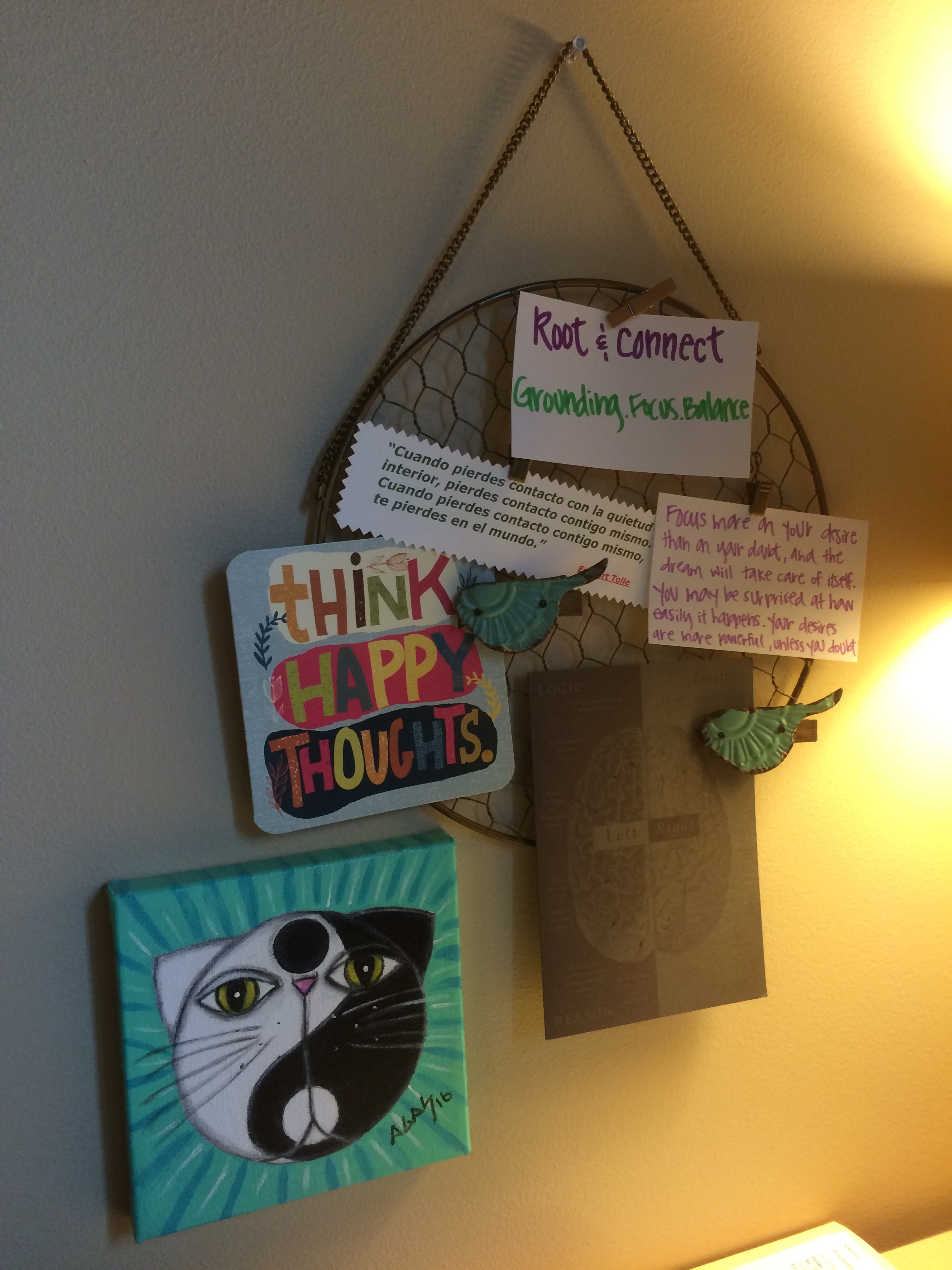
ying yang curious cat painting by Adriana at Gatos ilimitados

ying yang curious cat painting by Adriana at Gatos ilimitados

To Be Curious Is Everything

Recently, someone took the time to inquire about me and asked, “What is your driving force in life?”

It took a few moments of contemplation before coming up with my response which was curiosity!

I am not much of a netflix binger because:

a. I don't have a lot of free time to sit around and tune out

b. I am pretty high energy so I would much rather be moving and shaking than be stagnant and

c. I am too curious so I prefer reading to learn new things, writing to express an idea, creating in some way whether it be with my thoughts or with my hands, and experiencing life on my own rather than watching it on a screen

I will say that every once in a while, I will hear about a netflix show that sounds intriguing enough to make a couch commitment of at least 1 to 2 episodes a night 4 to 5 times a week. Thus far, these shows have all been in Spanish and the last one I felt borderline addicted to was called El Gran Hotel (the Grand Hotel).

This show required dedication since:

1. it was really long and drawn out

2. there were hundreds of twists and turns with heightened moments of drama and

3. the emotions displayed by the characters ranged from: love, shame, passion, anger, excitement, betrayal, hopefulness, envy, surprise, rage, joy, sadness, curiosity, and despair. It was an intense roller coaster ride of emotions that kept me on edge, but always wanting more.

In this show, I heard the phrase spoken in Spanish while subtitled in English- “La Curiosidad es Todo”, “Curiosity is Everything”. The interesting part about hearing this on the show was that in the last few months before watching it, I had been describing mindfulness with my clients as the practice of being curious, open, and flexible. There was that word again, curious.

I explain to people I work with that being curious means a lot of different things. I encourage them to get curious about their own thoughts, feelings, and behaviors in order to better understand themselves and relate with their self in a more loving, gentle, and compassionate way. In relating with others, I try to motivate them to feel curious about the other person's intentions, feelings,  and thoughts so that they are perceived as being caring and loving rather than being judgmental or critical.

If you take a moment to think about your own curiosity, you could make new discoveries about yourself, others, and your life. Since this is a topic that relates to mindfulness, my curiosity about feeling curious comes quite naturally and so I take the time to mull it over.

Things to be curious about:

  • the world and how things work

  • animals

  • nature

  • the creation of all life forms

  • people you know and love

  • people you don't know who you may want to know

  • people you don't know, but feel empathy for

  • why people behave in certain ways

  • why people say what they say

  • why you avoid people, situations, and conversations

  • why you stay closed off when what you want most is to feel loved and connected with others

  • why other people's feelings affect us so much

  • why death is so hard for us who experience the loss

  • why people end up falling in love with each other and sometimes hurt each other the most

  • why we choose certain careers

  • why we connect with certain people more than with others

  • why we are destroying the beautiful world we live in

  • why people leave or why they stay

  • your own self

  • why you say the things you say to yourself or why you act in certain ways

  • your feelings and what they are trying to tell you

  • your feelings and why they sometimes feel so big and out of control or why other times you can't seem to feel them at all (numbed out)

  • what other places in the world look like

  • what is another persons driving force

  • what makes another person feel loved

  • what is another person's story

  • how it feels to be from another country other your own

  • how it feels to be an immigrant living in America

  • how it feels to be first generation American with immigrant parents

  • how it feels to be discriminated against

  • how it feels to be rich or poor or never satisfied with what you have

  • how it feels to be completely at peace with who you are and choices you've made

This list could go on and on so I invite you to get curious about what makes you feel curious. I believe that curiosity is everything because without it, there is only apathy. Apathy defined is the lack of interest, enthusiasm, and concern. Without these things, life doesn't have purpose and we are simply existing rather than living, sort of like eating without tasting.

When you are being curious, you are showing that you care and caring IS everything! 


PostedNovember 2, 2016
Authorangela guerrero
1 CommentPost a comment

Daily Practice

In 2005, I was fortunate to have moved into a neighborhood that led me into stumbling upon Austin's Shambhala Meditation center. It was here that I began attending evening talks, workshops, and classes on mindfulness. During this time, I was also going to graduate school for counseling. Little did I know then, that what I was learning at Shambhala was preparing me to practice as a mindfulness counselor years later.

A few weekends ago, I had the pleasure of helping staff a weekend retreat at Portland's Shambhala Meditation center. It was a revisit to the first retreat of the Shambhala training series called Level I: The Art of Being Human which I completed in 2010 when I became hooked on the discipline of a daily meditation practice.

The vision of Shambhala is rooted in the principle that all human beings have a fundamental nature of basic goodness that can be developed in daily life and radiated out towards others in order to create an enlightened society where people and life's challenges are met with kindness, generosity, and courage.

Shambhala is a spiritual path of both study and meditation that helps us work with our minds and discover the joys of engaging the world with compassion for our self and for those around us. This attempt to live a more wholesome existence for ourselves and others is referred to as The Sacred Path of the Warrior.

At the end of the Level I weekend, we all shared our experience of having meditated together as a group for extended periods of time and this is what came up:

- Our natural innate capacity to pay attention to what we are doing while life is happening is shaky because it comes and goes so we strengthen this muscle through mindfulness/meditation practice.

- Our awareness allows us to notice when we are not being mindful so we practice coming back to our breath and to our body as a way to train our mind.

- When we meditate, we practice Seeing our thoughts, Acknowledging them, and Coming back to our breath as a way to anchor and help us become more of an observer of our thoughts without feeling the need to run in circles with them.

- When you practice sitting with yourself (body and mind), you show up for yourself over and over again which gives you agency over time and leads to a path of inner peace and wisdom.

- Meditation is way to learn how to reparent yourself as you SAY HELLO to every part of you, FEEL every part of you, and ACCEPT every part of you with gentle love and kindness.

- Meditation requires the practice of Bravery + Vulnerability so that we can become a Warrior.

For me being a Warrior means not being afraid of who you are on the inside and learning to trust yourself to meet life's challenges with genuineness and courage.

A daily meditation practice takes time, effort, and commitment. It also has the power to change your life and set you on a path to feeling good each and every day no matter what life throws your way at any given moment.

PostedOctober 5, 2016
Authorangela guerrero
CommentPost a comment

Our Vices

Would you like water, coffee, tea, wine or whiskey? how about something to eat? What about a piece of chocolate, candy, gum or maybe a cigarette instead?

Have you ever thought about the relationship we humans have with our mouth?

Freud proposed in his psychosexual stages of development, that certain areas of the body become sources of potential frustration, pleasure or both. He felt life was built around tension or pleasure, that all tension was due to the build up of libido (sexual energy), and that all pleasure came from its release.

In the first stage of personality development (0-1 years) known as the oral stage, the libido is centered around and stimulated by whatever makes contact with the mouth. Freud believed that oral stimulation could lead to oral fixation later in life and went on to describe people as oral personalities that engage in oral behaviors such as smoking, drinking, nail biting, or finger chewing when under stress.

When I took this picture years ago while walking along the streets of Florence, I remember thinking childhood vs. adulthood...'we give up one for the other'. The pacifier being one of the first things given to help us relax, soothe our crying, and comfort us in moments of feeling uncomfortable due to teething, body aches, a need not being met or feeling unsafe.

The cigarette satiates in much of the same way with an added bonus of taking deep breaths. People don't realize that part of the addiction to smoking is the mindful inhales and exhales that calm the nervous system.

I suggest to clients who tell me they want to quit smoking to engage in the exact same ritual they practice sans lighting the cigarette or instead putting something similar to a cigarette in their mouth as they focus their attention on breathing in and breathing out. Then asking them to notice if the urge to smoke the cigarette increased, lessened, stayed the same or went away. Also noticing if the compulsion to smoke had more to do with shifting their body energy, changing their environment from inside to outside or simply just needing a mental break.

I've been reading a book called The Gift of Our Compulsions as a way to help my clients who struggle with self control and/or impulse control which is characterized by impulsivity- failure to resist temptation, urge or impulse that may harm oneself or another.

Chapter 3 called Recognizing our Compulsions as Friends states this:

“whenever we are compulsive, what we are really longing for is to reconnect with ourselves. We are hungry for the experience of being grounded in our bodies again so we can live from the wellspring within that connects us to wisdom, our hearts, and to our lives. This is the connection that we knew so well when we were young; it has been waiting for us to grow up enough so that we can know and live it again on an even deeper level. Compulsions are our guides back into this connection, one that relaxes our minds, opens our hearts, and brings a twinkle to our eyes. They are not evidence that you are weak-willed or defective. Rather, they are powerful forces that are here to heal you to your core. To take this journey back to ourselves and into our full potential, we need to transform our relationship to our compulsions. If we trace them back to their roots, it is easy to see that they emerged to help us manage feelings that were too much for us. As infants, we were completely available to our feelings, both the joyful and the painful ones. The joyful ones kept us connected to our essence. The painful ones caused us to pull back from life.

The next time you find yourself feeling a need for something to put in your mouth:

1. take a pause

2. connect with your breath and your heart beat

3. close your eyes, go inward, and take an inhale through your nose on the count of 4, hold the breath in your chest for a moment, feel your lungs expand, then exhale through your mouth on the count of 6 and let something go with a loud sigh or sound

4. ask yourself what do I really need? what feeling is making me think that I need to have a drink, a smoke or all of the above?

5. get curious enough with your body to listen to it and wait to hear what it tells you by gently telling your mind that it isn't needed in this moment

Try to be mindful of how often you are using your mouth to escape from a feeling that you alone may be able to pacify with your focus, your attention, your love vs. a temporary fix.

* This is in dedication to all people who struggle with substance use, eating disorders, impulse control disorder, ADHD, depression, and anxiety.


PostedSeptember 1, 2016
Authorangela guerrero
CommentPost a comment

Take the Needle Off the Record

I haven't been very good about blogging these days. It's been difficult to hunker down and discipline myself to do a number of things I have stirring in my mind on a pretty consistent basis. Not so much to-do lists, but more like goals I've set for myself, projects I've half started, and books half way read that I would like to finish.

This past month I took another class at the Shambhala Buddhist center called Joy in Everyday Life. The most amazing thing I learned from the class is that compassion means having the willingness and courage to feel your own pain. I had always thought of compassion as something you feel for others when they are suffering or struggling, but had not quite made the connection that compassion was also about how much acceptance and love you practice towards your own pain and suffering.

For some reason, hearing this was a total game changer for me. I somehow felt more ease and bravery to feel what I feel even when it feels uncomfortable or unpleasant. My perception of my pain softened and so did my heart. With this softening, I noticed my inner voice being more kind and loving towards me.  The way I talk to myself seems to come from a place of love rather than from fear. Less words of judgement, more words of comfort. I have become an observer of my inner voice and mindfully choose what to believe and what to gently push away.

In the last few years of working as a psychotherapist, I have to say that one of the most astounding realizations I've had is how hard people are on themselves. It almost seems like the root of most people's suffering comes from their own minds because of what they say to themselves, how they say it, and how much they believe these things to be true- even when they aren't.

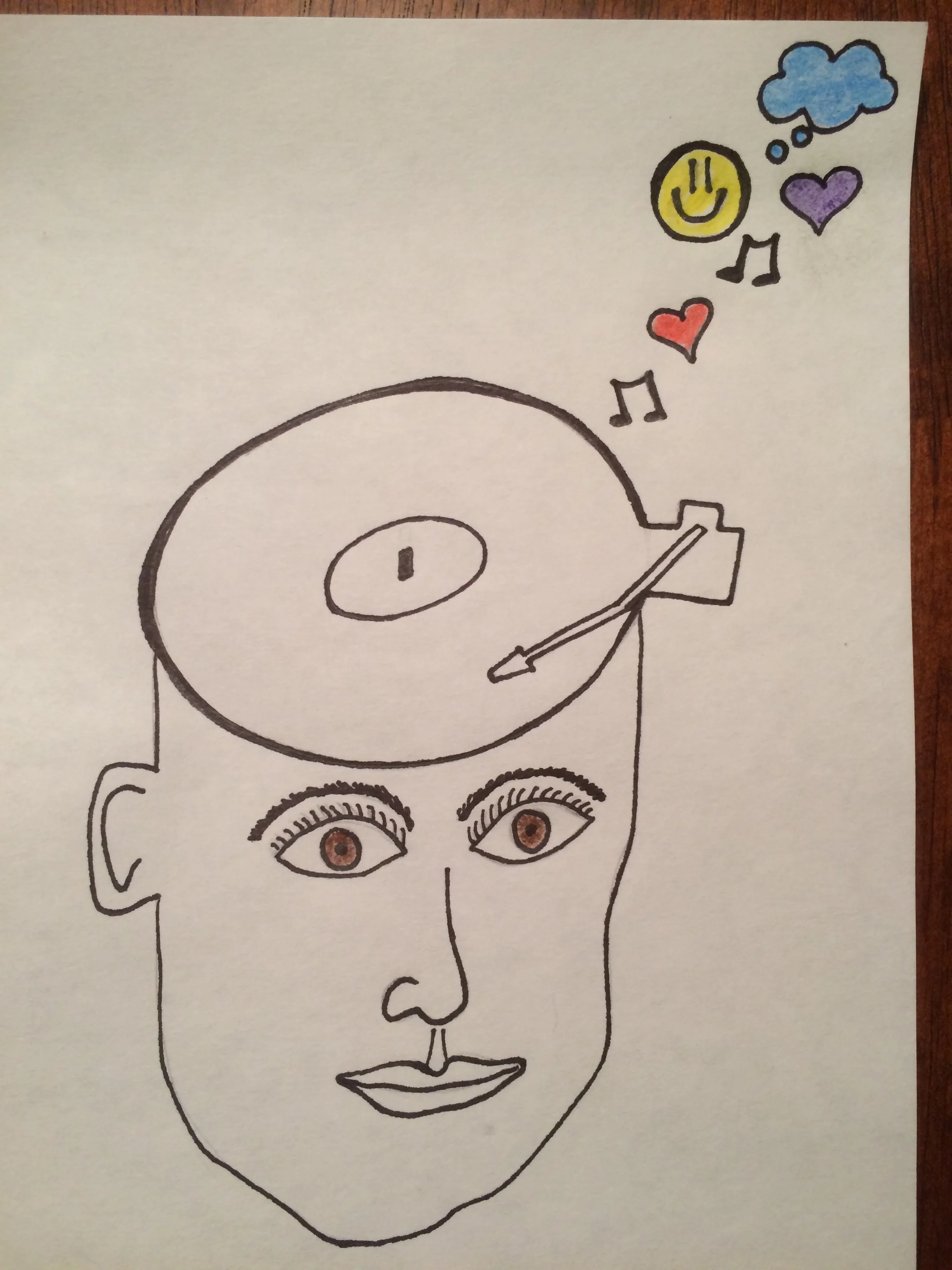
I have become even more curious about the mind since discovering this commonality among humans no matter what their age, culture or upbringing. People give so much of their power away to their thoughts simply because they don't know that the spinning record in their mind doesn't always have to be playing nor does it have to be listened to, that the music can be changed, and that they are in charge of whether or not the needle stays on or comes off.

Lately, I have been referring to the mind's spinning record as our inner voice that plays a tune created by either our inner critic or our inner compassion. One is harsh, self-loathing, insecure, and negative. The other is gentle, self-loving, confident, and positive. The needle on the record is our awareness, our focused attention. 

The questions to ask yourself might be, where and how do I place my awareness? What does the needle on my record focus on? What kind of records does my mind play the most, inner critic or inner compassion? Do the lyrics in my head make me feel good about myself or do they make me my own worst enemy? Is what I say to myself coming from love or fear?

What I know to be true in my own life is that yoga and meditation have been my saving graces. These are practices that actually help me to silence the spinning record in my mind and love myself more. They help me grow my awareness into something that feels more expansive and yet craves the simplicity of silence, stillness, spaciousness, and self-compassion. If I go weeks without practicing yoga or meditation, I just don't feel right. I don't feel my best. I begin feeling like I have to chase calm and peace rather than allowing for this state of being to just rest over me like a blanket that warms my mind, body, and spirit tenderly.

I felt encouraged to write today by my yoga teacher who said something that beautifully describes what an amazing yoga practice can do for the spinning record. She said, “Get fascinated with the rhythms of a subtle mind.” Doesn't that sound wonderful? Your thoughts don't have to be harsh and loud! They can be soft and subtle instead. Yoga is a sure way to take the needle off the record, shift your awareness, and begin learning how to play records in your mind that inspire your inner compassion more often.

One last thing to share on how yoga and meditation can improve your existence and chill out your mind:

During the Joy in Everyday Life class, we were assigned to read a chapter called Letting the Love Flow from a book called Ruling Your World. Some of my favorite lines read:

“Stabilizing our mind anytime of the day or night is like taking a mineral bath. It dissolves our stress and revitalizes us.  As we anchor the mind to the breath, we feel grounded, strong, and clear. Our hassles slide away because we are connecting with a deeper stream of energy. Is this peace the ultimate happiness? No, it's just the first stage of joy. To bring about the next level of joy, we contemplate the happiness of others.


PostedJuly 25, 2016
Authorangela guerrero
CommentPost a comment
attention=love

Attention = Love

Attention is taking notice of someone or something and regarding as interesting or important. It is also known as the action of dealing with or taking special care of someone or something.

The month of May turned out to be quite challenging for me because I was forced to feel uncomfortable and had no way out. I've decided to view this time as an experiment of noticing, feeling, giving attention to, and expanding awareness of what makes me…me.

My plan was to write a blog post on Love around the time of mother’s day, but for various reasons I wasn’t motivated or inspired enough so instead I tried practicing acceptance of how I was feeling without judgment, guilt or shame.

This process involved me getting curious about myself instead of feeling frustrated or annoyed with myself. A kind of deeper exploration of why I was not feeling my best and what I was actually feeling about not measuring up to certain standards I put on myself to achieve, do more, be productive, feel connected, and purposeful.

In the midst of this process of just being and feeling rather than doing, I actually allowed myself to feel emotions that I have a tendency to want to avoid or ignore because they are extremely uncomfortable for me. One feeling in particular that I was able to get closer with and understand better was loneliness.

This is an emotion that is often so hard for me to sit with that I normally use sadness to help me cope because feeling sad is less painful and at least I know what to do to bring it some relief like cry, journal, pray or try to numb out by binging on Netflix.

Essentially I forced myself to give attention to my loneliness instead of trying to find ways to escape from it.

Rather than distract myself with people, places, and things that would consume any moment of down time that could potentially turn into a moment of feeling, I chose to STOP and be conscious (painfully aware) of my loneliness and sadness in order to really feel these emotions, know them better, and understand what it is they need from me.

By giving them the attention they need, their grip over me loosens up and I don’t feel so suffocated, uncomfortable or afraid of them.

To my surprise this experiment turned out to be another one of those awakening experiences where it can get pretty dark in the tunnel while you’re in there, but once you’re out…everything seems brighter, more aligned, and sensical.

What I learned from this experiment is that loving yourself is a practice that often takes work, feels hard, can be complex, and definitely requires patience with discipline. I realized that the moments when you feel separate from or unlovable, are actually the moments when life is presenting you with an opportunity to step in and love yourself hard… even harder than you ever imagined you could.

The most amazing discovery I made during this experiment was that self compassion and self love is easier to understand if you begin to treat your emotions with the same kind of unconditional love and tenderness that a mother feels for her own child.

The next time you feel an emotion that feels uncomfortable for you, try not to distract yourself from it, but instead sit with the discomfort and give it the TLC it is needing from you.

If you would like to try this experiment yourself, follow these steps:

1. Stop and connect with your breathe

2. Notice what you feel by dropping out of your head (thinking) and into your body (feeling)

3. Pause and Be with the feeling

4. Notice any resistance or urge to Do something to minimize the feeling and stay with it

5. Get curious as you place your complete focused attention on the feeling no matter how much you want to suppress or avoid it

This process of giving attention will soften the emotion, lessen the energy it requires of you, and release you to experience love for yourself and for others more fully.


PostedJune 14, 2016
Authorangela guerrero
CommentPost a comment
As it is.jpg

As it is

How often do you wish you could change something about a particular situation or circumstance in your life?

We invest much of our time, energy, thoughts, and emotions on trying to figure out how to solve what feels like a problem because our brain is a problem solving organ. The brain's job is to solve problems so even when we don’t have a problem, we create one in our mind.

As a psychotherapist, my days are spent working with people who are seeking help on how to solve a problem or change something outside of themselves so that they can feel better on the inside.

The first sessions with clients are dedicated to listening to them tell their stories. Once a comfort level is reached and rapport is built, our connection grows stronger. I notice that what changes first is their perspective of the problem instead of the actual problem. When listening to what people want to change externally shifts into hearing them talk about what they need to change internally, I know that real work is happening because their awareness has expanded.

In the last few weeks, I have been learning more about accepting what is, in my ACT class. ACT stands for Acceptance Commitment Therapy which is a form of therapy that incorporates mindfulness skills. Mindfulness means paying attention with flexibility, openness, and curiosity. The acronym ACT stands for:

A- Accept your thoughts and feelings, and be present

C- Choose a valued direction

T- Take action

I am learning about this therapy so that I can try to help my clients come to a new understanding of the problem that they are wanting to change. It can be difficult to be the sounding board for a person who is struggling with a problem that they have no control over because the truth is...sometimes we just have to accept things as they are and more importantly accept people as they are.

We can only control our self by noticing the thoughts we choose to engage with, managing our emotions with gentle curiosity, responding with loving kindness vs. reacting, and committing to taking actions that line up with our values so that we can create a full and meaningful life.

One of my newest friends in Portland who I respect and admire reminds herself of this everyday when she looks at her wrist. I asked Lauren to explain what the tatoo meant and she said, “Just accept what we cannot change and make the best of it. I hate using up energy on things that are futile and that I am unable to impact so I don’t. In a way, it’s attempting to release attachment.”

So there you have it. As it is...accept and work to change you so that your awareness of a problem causes you less suffering. Live now here with clear intentions, act in service of what you value, and be your best self!

PostedApril 28, 2016
Authorangela guerrero
CommentPost a comment
IMG_0309.JPG
IMG_0323.JPG
IMG_0327.JPG
IMG_0511.JPG
IMG_0424.JPG
IMG_0514.JPG
IMG_0517.JPG
IMG_0521.JPG
IMG_0579.JPG
IMG_0580.JPG
IMG_0589.JPG
IMG_0671.JPG

Energized by Spring and Colors that Keep you Feeling this Way

Spring time in Portland is in full effect. The trees are blooming with bright beautiful colors making it very tempting for me to stop at each corner to take a picture and capture this amazing transformation that happens after many cold and rainy days.

The change feels so drastic that it's almost as though the entire city comes alive after having been dormant throughout the winter months. People are out and about, the hiking areas fill up, camping trips start happening, and lots more bike riding to be had.

It's awesome to experience this external change that directly influences our internal mood and state of being. We humans are deeply impacted by our environment and by how we experience our senses. Spring seems to be one of the seasons that really enhances the senses.

We get to see natures vibrant growth and brilliant colors, we hear the birds chirp their tune of gratitude for the change in climate, we smell the aroma of flowers as we walk by, we taste the freshness of cooler food and drink, and we feel the warmth of the sun on our skin now that we've been able to shed the layers of clothes we no longer need.

In thinking of this season, I have had Ayurveda on my mind. It is an alternative medical system with historical roots from India that actually follows three seasons instead of four. Its practices align with their seasons which they refer to as vata (late fall to early winter), kapha (coldest part of winter into spring), and pitta (late spring into early fall). These seasons are also considered doshas and the Ayurvedic belief is that they govern not only our body constitution, but everything else in the cosmos as well.

Ayurveda therapies and practices are now known in the Western World and are being integrated with general wellness applications for medical use. I was first introduced to Ayurveda by my father who became intrigued by alternative medicine in the early 80's and dedicated much of his life to understanding it in order to help people heal holistically by treating the root of their physical, mental, and emotional problems. He and his wife are committed to living in alignment with Ayurvedic beliefs so much so that they even incorporate it into their wardrobe.

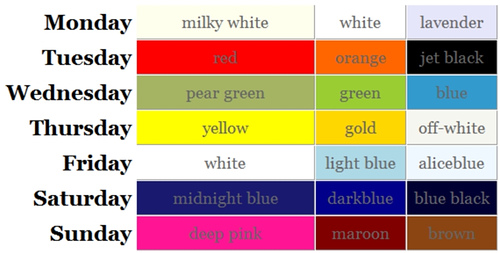
I share this with you because I myself have been following this practice for the last few years and have noticed a positive shift in my overall mood and energy level when I dress in sync with the colors that go with each day of the week. Just as spring makes us feel more energized so do the things that we do for our minds, our bodies, and our spirits to feel more in alignment and in tune with the natural flow of life.

Below is a blurb I found for you to read more on the colors of the week along with a chart of the colors so that you can start following along to see if you notice a difference in your overall state of being. Why not? Surely I'm not the only one who is looking for ways to feel more energized even when it's not spring time. Have fun with it and happy Spring!

*note: Friday is purple day so the chart below is a bit off. Purple power is a must.

A person should wear clothes of appropriate color for each day of the week, in order to absorb the planetary energy in the light in a positive way. For instance, to calm down the mind, which in Vedic astrology relates to the Moon, the person should dress in white clothes on Monday, which is the day of the Moon. Tuesday relates to Mars, so red or orange is the best color on that day. Wednesday is Mercury which is green while Thursday you should dress in yellow and get the blessings of Jupiter. Friday relates to Venus so it is good to wear purple and bright colors. Saturday is the day of Saturn, and best for blue, black, and dark colors. Sunday is a dark red color for the Sun. ~Vasant Lad

ayurveda colors
PostedApril 13, 2016
Authorangela guerrero
CommentPost a comment
Self worth.jpg

Self Worth

This is a topic that I have been wrestling with for the last few years. Since becoming a psychotherapist and working more with adults, I find that about 95% of my clients are coming in for various reasons, with different stories/life experiences, and sharing a common factor that is, this deep sense of lacking, that I believe we as humans all feel.

I see how difficult it is for people to be kind, gentle, and loving towards themselves. It astounds me how most of the time it is because of two emotions that creep around their psyche and cause them to feel so much pain that continues to get fed by their self loathing. These two emotions are the ones we don't like to feel and definitely don't want to talk about- guilt and shame.

I've read articles and heard about how much of this may actually stem from our childhood when our developing minds are constantly hearing things like- “No” or “Don't do that” or “That's wrong.” All parents mean well with the intention to protect and correct. Our self is constantly being told what to do or what not to do during life's stages of childhood, adolescence, and young adulthood until finally we become an adult who is then 'allowed' to think and feel however we want.

What's interesting is once we're at this point, where we're free to decide who we are, who we want to be or what we want to do, we seem to be too weighed down by feelings of guilt and shame to be able to make these determinations with confidence and love for self. For some reason, the choices we've made throughout our life that led us down hurtful paths of feeling regret or remorse seem to have more power over us then feelings of self forgiveness and understanding.

The realization I have been having most recently in the last year is that the more I accept myself with all of the good choices I've made along with all the bad ones, the more I am able to feel worthy of living a life of value and the more self worth I grow. My worth not only comes from how I treat myself, but also from how I treat others and what I have to give. Being self absorbed actually stunts the growth of your self worth because if you are not able to think outside of yourself, you limit true connection and we humans, are meant to connect with others in order to feel whole.

Self worth is not something that just happens one day that you can check off of your to do list. It is a practice that needs to be nurtured moment to moment and day by day. If I live in a state of constant self rejection where I allow myself to believe that my value is only worth what others believe it is, then of course the end result is that I will experience life and the world as a constant rejection. If I believe that what I do isn't good enough, what I say doesn't matter, and who I am depends on how others view me, then the end result is that I am disconnected from myself because I haven't taken the time to actually know myself and grow my worth according to what I stand for and what I value as important.

I can't talk about self worth without mentioning self compassion because it wasn't until I discovered self compassion, that I was able to really begin to understand and nurture my self worth. Self compassion is learning how to become your own best friend. It is treating yourself the way you would treat a dear friend, a beloved pet or an innocent child by being loving, kind, and gentle with your words and with your actions. This is where our inner dialogue (inner voice) plays a big role in how we feel about ourselves, how we view our self, and how worthy we believe that we are.

A few weeks ago, I started taking a class to learn about Acceptance Commitment Therapy where we have been discussing how our life experiences, thoughts, and actions can be in favor of suffering or of valued living. My understanding thus far is that we all have the ability to accept what is, with less struggle and commit to living a life of value.

Here are a few questions that come to mind when I think of measuring whether or not your self worth is growing or may need some nurturing:

  • What do you do to take care of your mind, body, spirit, and emotions?

  • How do you talk to yourself?

  • Do you listen more to your inner critic (devil) or your inner compassion (angel)?

  • What do you value?

  • What do you do to move in direction of your values?

  • Do you value yourself?

  • What do you believe about yourself?

  • Do you believe in yourself?

  • Who do you see when you look in the mirror? What do you say?

  • How accepting are you of your faults or flaws?

  • What things do you do to show yourself love, kindness, and gentleness?

  • What do you really need in order to be happy?

  • How much gratitude do you feel and show?

  • How do you treat others?

  • What do you do for others?

  • How do you make others feel?

  • What do you do, all on your own, that makes you feel whole?

  • How much time do you spend creating vs. thinking about creating?

  • Who determines who you are?

An old friend reminded me of a saying this week that I think ties in nicely with this topic of self worth: “We accept the love we think we deserve.” What if I shape that in a different way and say...“When we learn to accept love from our own self, we will believe in the love we know that we deserve.”

A newer friend shared this with me recently that I feel sums up where I am now regarding my own self worth:

“If you want something really, really badly, let go of it completely.

When you let go, you will suddenly remember that you are complete as is.

This will also give the thing you wanted, or even better, a chance to come to the centered, complete and worthy new you.

The crazy thing is, it suddenly won't be the source of your happiness.

You will be the source of your happiness.

Everything that comes into your life is a by-product of how truly connected and accepting you are of yourself.”

PostedMarch 24, 2016
Authorangela guerrero
CommentPost a comment
noise

Sound It Out

This weeks theme was sound.  I tried out a new yoga class where the teacher was encouraging us to make noise as we moved through poses and let out our breath. There is something so therapeutic about opening your mouth to let out sounds and sighs when we have so much stored up inside.

Sometimes I wonder if our voices have a mind of their own and wonder why we only use them to talk or sing in the car. Our voices hold so much energy and most of the time, we monitor how that energy is set free.

Hearing is one of our senses that highly influences our body, mind, and emotions. Think about how you feel when you hear loud sounds, soft sounds or how different kinds of music completely change your mood. Well what if our sense of hearing actually feels relief when we allow ourselves to make some noise?

In 2013, I started working with my own psychotherapist. Lo and behold she brought to light for me that I had anger I wasn't aware of. Working with her, I realized that passive aggressive behaviors were a sign of pent up anger needing to be released. She taught me to purge my anger through an invaluable tool that I now share with my own clients.

Anger is an energetically charged emotion that needs to be discharged and the best way to do this is through:

  • Movement- run, walk, kickbox, punch a pillow, punch the air, just move the energy flow.

  • Sound- scream in your car or closet, let out a good sigh, sing, hum, cry like you mean it, laugh out loud.

  • Words- write in a journal without censoring, practice saying out loud what you want to say to someone else until you're ready to air it out, express yourself, communicate your boundaries, wants, and needs.

You can be creative on how you want to purge your anger as long as you get it out in these 3 ways. If not released, this is an emotion that becomes very toxic for your body and mind. There is nothing wrong with feeling anger as it is a natural emotion that arises to protect you. It's in the when and how you release it, that makes all the difference.

During sessions with clients, we often take breaks from talking to take deep breaths and connect with a feeling that may be needing attention. I encourage them to really let go during the exhales and to feel comfortable with letting out loud sighs in order to release the tension and suppression of emotions. At first, they seem too shy to vocalize how they feel through sound. Once they realize the huge release they experience from making some noise, they open up to the idea and I witness their letting go and see the relief on their faces and in their body.

This is an invitation for you to make some noise with no holds barred. Begin a new kind of relationship with your voice and the sounds it can make. Open your mouth, let something out, and notice how this helps to liberate you and lighten the load you carry inside.


PostedMarch 14, 2016
Authorangela guerrero
2 CommentsPost a comment
headless

Get Out of Your Head and Into Your Body

This picture was taken as a reminder for myself to let go of thinking so much. I found it sitting outside a friend's door and when I asked her about it, she replied with, “let go of everything, including your head.”

Then a few weekends ago at a yoga workshop called 'Coming to our Senses', the presenter stated something similar to this in different words. She said “take the needle off the record and stop the spinning mind.”

In therapy sessions, I feel that much of what I am helping clients with is learning how to get out of their heads and more into their bodies. To connect with their breath, their five senses, and practice mindfulness so that they feel less mind full.

The body is where we hold our emotions. It's also where we stuff them, store them, and try to ignore them.

What most of us don't realize is that these emotions need to be felt, seen, and heard. They need our attention and our love so that we can heal from past traumas and painful experiences that keep us weighed down and in the dark. The more we try to suppress and avoid them, the more powerful they become until we have no other choice but to feel them. I see emotions as our human guides because without them, we would feel nothing and then well, we wouldn't be human beings, we would be robots.

It wasn't until I became more involved in yoga and meditation, that I learned that I too was a walking head. I spent most of my time, thinking and thinking and actually believing every thought as though it were true because it was in my mind. The result was ongoing feelings of anxiety, depression, and fear.

If we allow it to, the mind can become a hamster wheel that keeps us stuck in a variety of thoughts that are full of judgment, self criticism, stories we tell ourselves, our misperceptions of self and others, and negativity that eats away at our souls and self worth.

Movement is what our body needs. Breath is what our mind needs in order to relax and remember to drop into the body. In yoga, we learn to feel and listen to our body. We use the breath as a healing agent to loosen up the pressure and tension we hold in our body that more than likely is also where we have stored emotions that we are too afraid or uncomfortable to feel.

This was a passage read in yoga class from The Book of Awakening by Mark Nepo:

We can only consider things so long. After a while, all the information-all the options and opinions-will begin to weigh us down. After our deeper eyes have seen the situation, all the well-meaning voices telling us what we should or should not do will start to feel like strings we can't cut through.

This was poor Hamlet's fate. He overthought his life away. He over-considered which way to go until he felt stalled and oppressed by just being in the world. It is natural enough to be cautious and thoughtful, especially when faced with important decisions, but often the only way to know what awaits us to live to it.

This brings to mind the revelation that came upon a Hindu sage centuries ago. One day in the middle of their morning prayers, the sage suddenly rose and ushered his students away from the monastery. He rushed about them and shooed them back into life like little ducks, proclaiming, “The day is to be experienced, not understood!”

If you want to feel more calm and ease, go ahead and start practicing this daily. Get out of your head, more into your body, and allow yourself to feel with mind, body, and spirit as a whole human. And remember to breathe through whatever comes up.


PostedMarch 7, 2016
Authorangela guerrero
CommentPost a comment
Mount Tabor, Portland, Oregon

Mount Tabor, Portland, Oregon

What Grounds You?

To be grounded means to be well balanced and sensible.

When I think back on my teens and twenties, I remember the good times fondly, many challenging times filled with confusion and difficult emotions, and a huge chunk of time spent in a bubble of scattered thoughts that kept me pretty self absorbed, while at the same time disconnected from my own self.  A perfect recipe for being very uncentered and far away from feeling grounded.

I was living IN my head instead of living WITH mind, body, and spirit.

In my late twenties, one of the things I discovered about myself when I slowly began to emerge out of my bubble of comfort and cluelessness was that I always felt more calm, at ease, and less anxious when I was around trees.

On my 29th birthday in late November, I remember it being a beautiful day outside. A good friend decided to take the day off of work to hang out with me and when he asked what I wanted to do, I told him that I wanted to walk around town and take pictures of all the gorgeous trees with fall colored leaves. This turned into a ritual that I adopted no matter the season because I knew it was something I could do to help me feel grounded and more connected to nature, to beauty, to change, and to life.

My love for trees has grown so much in the last 10 years, so much so that now I live in a place known for its magnificent trees. The roots I planted then continue to grow with the knowledge that there is something sacred, glorious, and living that I can always turn to when I need to feel solid, stable, and secure.

Think of what it is that helps you to feel more grounded, then try it. Ultimately, don't we all want to feel well balanced and sensible?

Now I'd like to share these words about trees that profoundly moved me and inspired my writing this for you today.

Found in a magazine called Stay Wild and written in an article called Nor Cal Swimmin Club by Jeff Edwards:

“For me, trees have always been the most penetrating preachers. I revere them when they live in tribes and families, in forests and groves. And even more I revere them when they stand alone. They are like lonely persons. Not like hermits who have stolen away out of some weakness, but like great, solitary men, like Beethoven and Nietzsche. In their highest boughs the world rustles, their roots rest in infinity; but they do not lose themselves there, they struggle with all the force of their lives for one thing only: to fulfill themselves according to their own laws, to build up their own form, to represent themselves. Nothing is holier, nothing is more exemplary than a beautiful, strong tree.”

“When a tree is cut down and reveals it naked death-wound to the sun, one can read its whole history in the luminous, inscribed disk of its trunk: in the rings of its years, its scars, all the struggle, all the suffering, all the sickness, all the happiness and prosperity stand truly written, the narrow years and the luxurious years, the attacks withstood, the storms endured.”


PostedFebruary 25, 2016
Authorangela guerrero
CommentPost a comment
depression

Depression

Most of the clients I work with are seeking therapy because they are suffering from symptoms of depression and/or anxiety. Often times, the anxiety has gotten so bad that they cannot handle daily tasks or being in social settings. The depressive symptoms they are experiencing are debilitating, draining or just flat out suffocating.

In 2014, I attended a training called Yoga as Mind-Body Medicine with Bo Forbes. She is a clinical psychologist who integrates yoga, mindfulness, neuroscience, psychology, and movement studies. I specifically remember that in the first 5 minutes of her training, she said that by the year 2030, depression and anxiety would be two of the most predominant illnesses affecting people worldwide. This is an epidemic that is already being seen not only in adults, but even more so in our children.  

The state of people’s mental health has become more of a problem in the last decade. What do you think the reason for that is?  

I largely account it to the social stigma around mental illness that surprisingly still exists in many parts of the world and to the increase in technology which has us more connected in one way, but much more disconnected in the way that we need in order to survive as a species. Human beings need relationships in order to feel connected, fulfilled, and alive. We need to feel connected with self, person to person contact, human warmth, and touch.

Depression and anxiety is not something that gets treated and just goes away.  Many people today take medication to help stabilize their moods and symptoms, but many times the medication also serves as a kind of band aid. The sort of mindset that… if you don’t feel the problem, then it no longer exists.  My concern as a psychotherapist is that depression and anxiety may be symptoms of an underlying problem that has not been uncovered or tapped into and more often than not, the problem has to do with unresolved issues, unspoken words (past trauma), and suppressed emotions that cause harm to the mind, body, and spirit.

In my opinion, treating depression and anxiety involves:

1.       Understanding what the specific symptoms look and feel like

2.       Exploring how the symptoms are affecting daily functioning

3.       Discovering why certain feelings seem to be overpowering the mind and body

4.       Doing the work of learning HOW to MANAGE and LIVE a fulfilling life despite having the symptoms. The HOW can be the focus and the light at the end of tunnel.

 As a counselor, I see my role as being the guide in helping people understand and learn what works specifically for them so that they see life as something worth living for. For this reason, I have become more and more passionate about finding ways to help others heal from the inside out. 

Root&Connect came from this desire to want to help others feel better. From my own experience, I have learned through trial and error that coping and managing depression and anxiety takes effort just like everything else that is worthwhile.

The path of Root&Connect is to Root, Connect, Grow, Nurture, and Live.

 My goal is to help people figure out the process that works best for them so that they can begin and follow this path as a way to live, not as a means to survive. My own personal process to achieve the path is:

1.       Daily meditation practice

2.       Giving and feeling gratitude for the ways that I am blessed each day

3.       Exercising regularly

4.       Yoga for mind, body, and spirit union

5.       Supplements

6.       Eating balanced and healthy

7.       Gentle love and kindness towards self and others

8.       Mindfulness practices…Being now here moment to moment without judgment

9.       Doing things that I feel passionate about, things that light up my spirit

10.   Connecting with my higher power and with people I encounter no matter where I am

I met my new favorite yoga teacher, Meghan, at a studio here called Firelight Yoga. Last week in class, she said these simple words that landed so perfectly and resonated through my entire being…”we have breath and we have movement, these are such precious gifts that we often forget to feel thankful for.” For me these are the two greatest gifts we have to help us feel rooted and connected with self so that we can actually feel connected with others and the world around us.

What would be your process to follow along the path of Root&Connect?  Life is too short to let depression and anxiety get the best of us. 

PostedFebruary 22, 2016
Authorangela guerrero
CommentPost a comment
Newer / Older

Powered by Squarespace.  Content used with permission from Design Trust For Public Art Space.